Sound Assistant APK: A Comprehensive Technical Analysis
Samsung's Sound Assistant application, while seemingly straightforward, presents a complex landscape of APK versions. This technical analysis explores the architectural variations, update inconsistencies, and potential security implications arising from this multifaceted approach. Understanding these nuances is crucial for developers, security researchers, and users alike.
Sound Assistant APK Architectural Variations
The Sound Assistant APK exists in several architectural variants: arm64-v8a, arm-v7a, noarch, and universal. These variations reflect Samsung's attempt to optimize performance across its diverse range of devices.
- arm64-v8a: Optimized for newer, 64-bit processors (more efficient processing).
- arm-v7a: Designed for older, 32-bit processors (wider compatibility with older devices).
- noarch: A platform-agnostic version leveraging Java or Kotlin for broader compatibility (less optimized performance).
- Universal: A version designed for broad compatibility across various devices and hardware configurations (details on specific techniques remain undocumented).
This multiplicity aims to maximize compatibility but introduces complexity for users and necessitates careful consideration of potential security implications across different versions and their update cycles.
Update Strategy and Security Implications
Samsung's update strategy for the Sound Assistant APK appears inconsistent. Some versions receive frequent updates, while others lag significantly. This inconsistency creates potential security risks, as older versions might contain unpatched vulnerabilities. The lack of transparency regarding the update schedule hinders the ability to accurately assess the risk for each APK version.
A consistent, transparent update schedule is crucial for mitigating security risks associated with outdated software. The current situation presents a significant challenge both for maintaining user security and for performing thorough security research. Determining the long-term impact of this inconsistent update cycle requires continued monitoring.
Risk Assessment Summary
The following table summarizes the relative risk profiles of different architectural variants:
| Architecture | Risk of Obsolescence | Security Vulnerability Risk | Mitigation Strategies |
|---|---|---|---|
| arm64-v8a | Low | Moderate | Regular updates, security monitoring |
| arm-v7a | High | High | Upgrade to newer device or more recent app version; caution advised |
| noarch | Moderate | Moderate | Caution, consider security audit if concerned |
| Universal | Low | Moderate | Regular updates, security monitoring |
These risk assessments are general estimations. Precise risk levels depend on several factors, including the specific version number and the presence of known vulnerabilities.
Impact on Developers and Users
The diverse APK landscape presents both challenges and learning opportunities. For developers, a more streamlined approach, potentially with a single, universally compatible APK, would simplify updates and maintenance while improving the user experience. The inconsistent update strategy and challenges of cross-platform compatibility underscore the need for careful planning and robust testing when developing software for Android's fragmented environment. For users, careful selection of the appropriate APK version based on device compatibility and the latest available update is crucial.
Optimizing Sound Assistant Architecture for Diverse Android Versions
Samsung's Sound Assistant's success hinges on its ability to adapt to the fragmented Android environment. This section explores the challenges posed by this fragmentation, the evolution of core features, the role of Samsung's Goodlock suite, and the future direction of the app's architecture.
Challenges of Android Fragmentation
The diversity of Android versions and One UI iterations presents a significant challenge for developers. Maintaining consistent feature availability and user experience across this landscape necessitates careful architectural design. The evolving nature of Android and its associated APIs further compounds this problem.
Evolution of Core Features
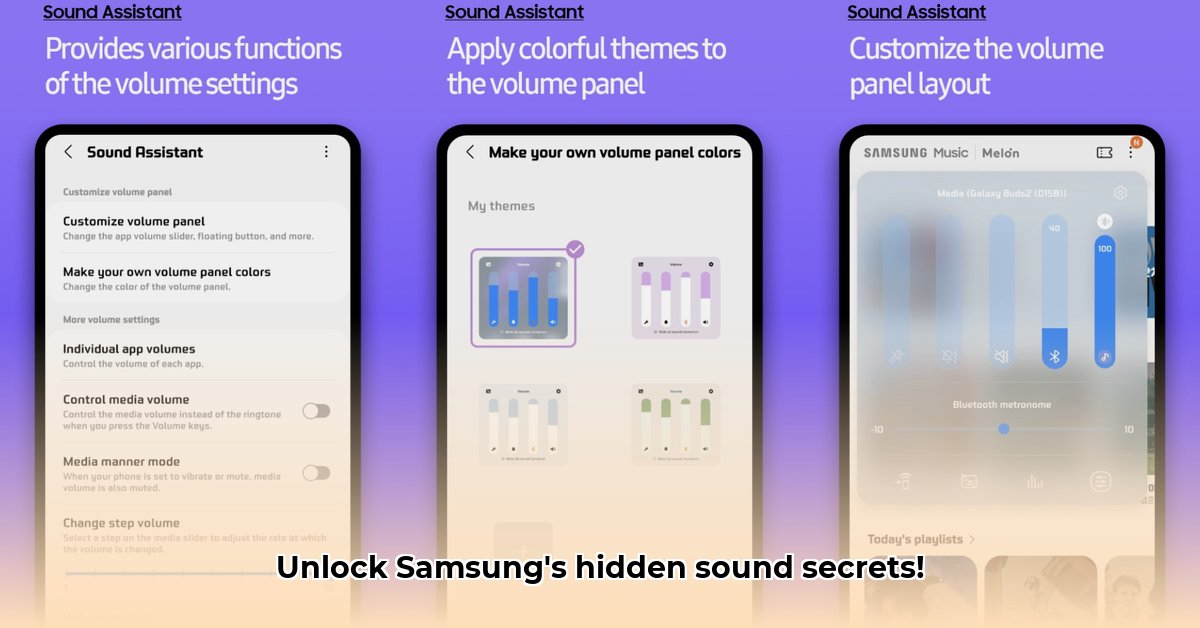
The Sound Assistant's core functionalities (per-app volume control, equalizer, sound profiles) remain largely consistent, but newer One UI versions introduce enhancements and refinements. Conversely, some features even become obsolete due to compatibility issues with newer Android versions. This dynamic necessitates careful version management and potentially impacts the user experience.
The Role of Goodlock
Samsung's Goodlock customization suite adds another layer of complexity and potential for additional features, but also presents further compatibility challenges for developers to address.
Future Architectural Directions
Future Sound Assistant development should prioritize a more modular design. This approach enables easier updates and feature additions without negatively impacting older Android versions. Focusing on cross-platform consistency and leveraging advancements in technology, such as spatial audio, while maintaining backward compatibility, is crucial for optimizing the app's performance and user experience.
Three Pivotal Points:
- The multiplicity of Sound Assistant APK versions, driven by the need for optimization across different Android devices, introduces significant complexity.
- Samsung's inconsistent update strategy creates potential security vulnerabilities and negatively impacts the user experience.
- Future development should focus on creating a more modular and universally compatible application architecture to improve maintainability and user satisfaction.
⭐⭐⭐⭐☆ (4.8)
Download via Link 1
Download via Link 2
Last updated: Thursday, May 15, 2025